Is my repair shop's payroll too high for my sales?
Payday comes and the bank account feels thin, even on good weeks. Here's how Nolavi works through it, the same way a good mechanic works on a car: find the concern, the cause, the correction, then verify the fix.
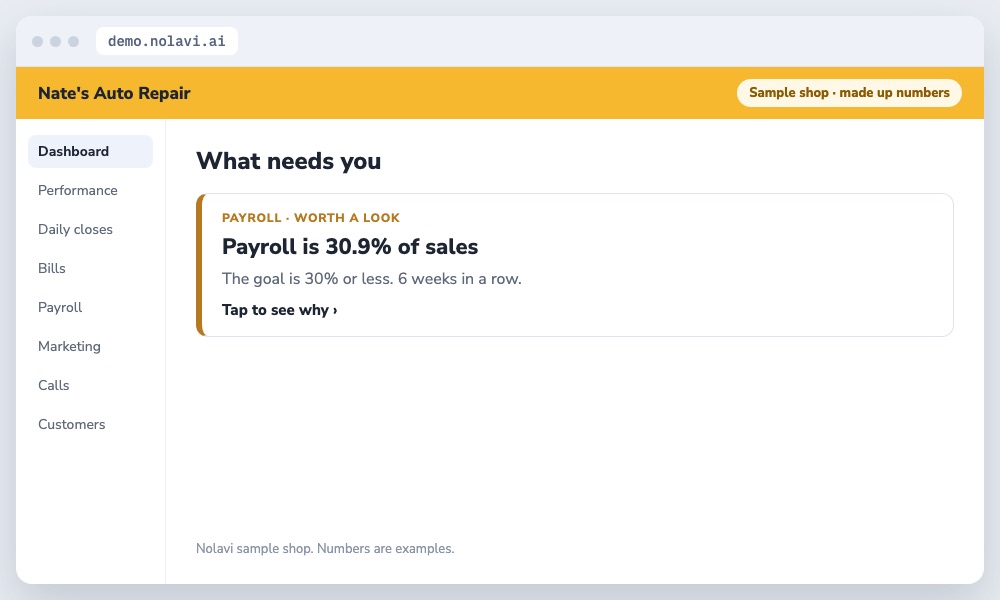
Nate's payroll ran 30.9% of sales, over his 30% goal, for 6 weeks straight.
Over goal, with a reason ready.
2
The cause
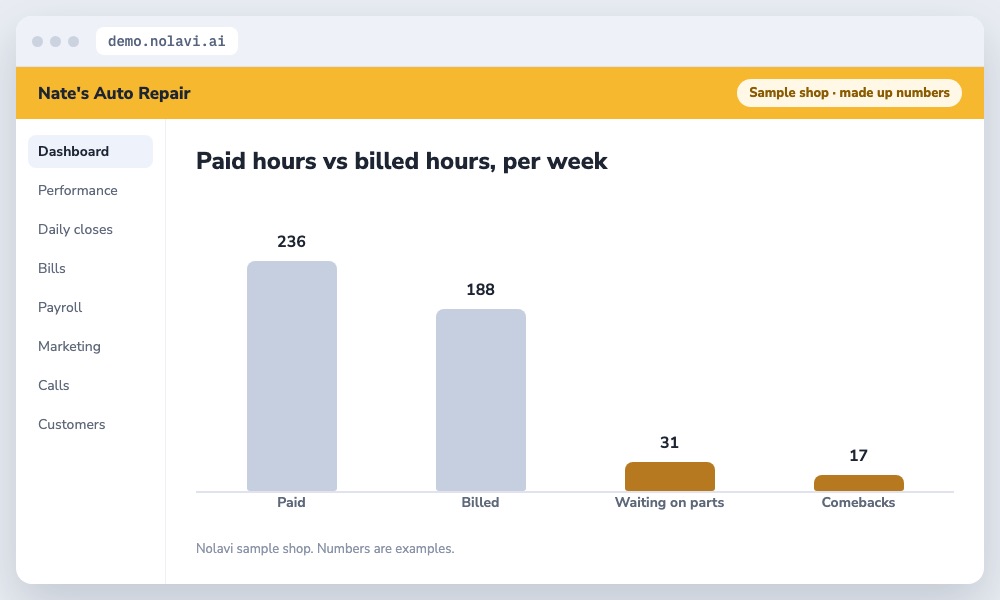
Nolavi compared paid hours to flag hours. Techs were paid for 236 hours a week but only billed 188. Most of the gap was waiting on parts and comebacks on two jobs.
The gap had two causes.
3
The correction
Parts are now ordered when the estimate is approved, not when the car is on the lift, and Nolavi flags any job that comes back.
4
The verification
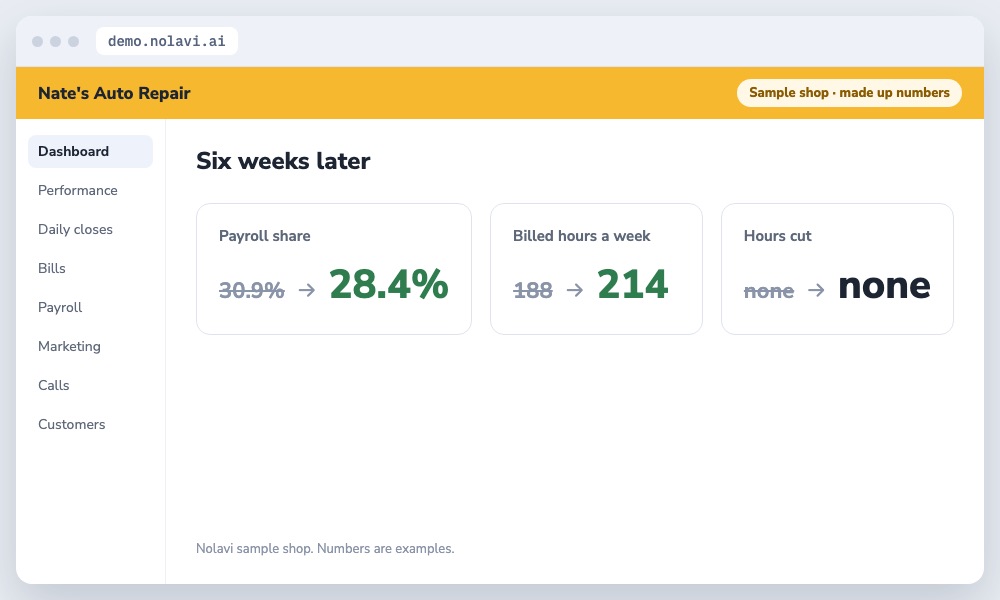
Billed hours rose to 214 a week and payroll fell to 28.4% of sales, with no one losing hours.
Better, without cutting anyone.
How we work. We make changes like this for shops all the time, using each shop's own data. The numbers shown are examples.
Auto repair shop payroll, ready to approve. Nolavi adds it up, checks it against sales, and you tap OK. See how it works
Questions
Quick answers.
What percent of sales should payroll be at a repair shop?
Many shops aim for about 30% or less, including all staff. Your goal depends on your mix of work.
Why is my payroll high when we're busy?
Often techs are paid for hours they can't bill: waiting on parts, approvals or comebacks.
Open the demo and find this kind of problem in a minute. Or book your 14 day free trial: it starts with a quick call, and we set it all up and fit it to your shop.
 Nolavi