How do I measure and improve my auto repair technician efficiency?
You know some of your techs are faster, but you can't quite say by how much or why. Here's how Nolavi works through it, the same way a good mechanic works on a car: find the concern, the cause, the correction, then verify the fix.
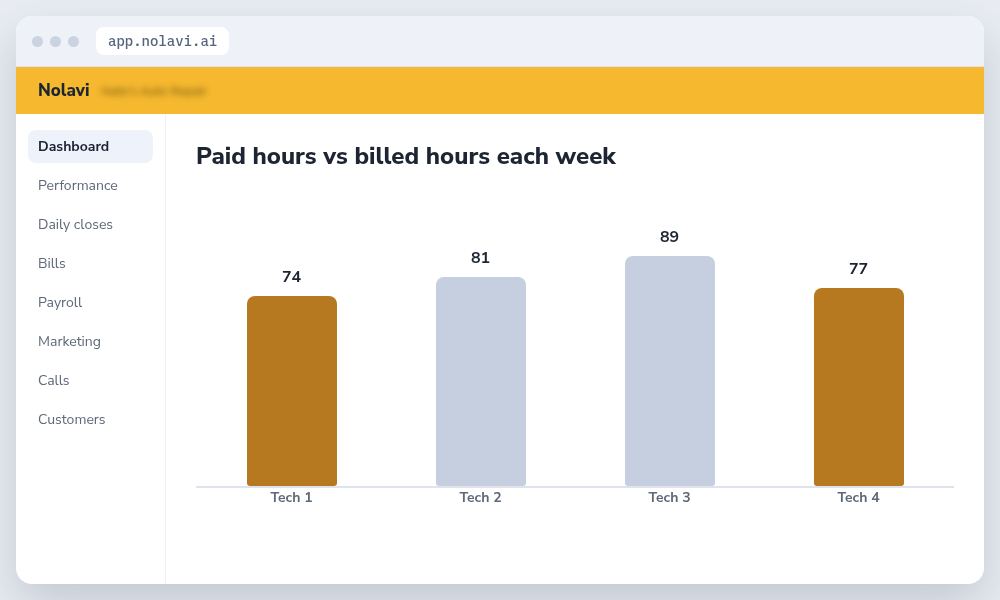
Nate paid for 236 tech hours a week and billed 188. He knew the gap existed but had never seen it in numbers.
Two techs well below the others.
2
The cause
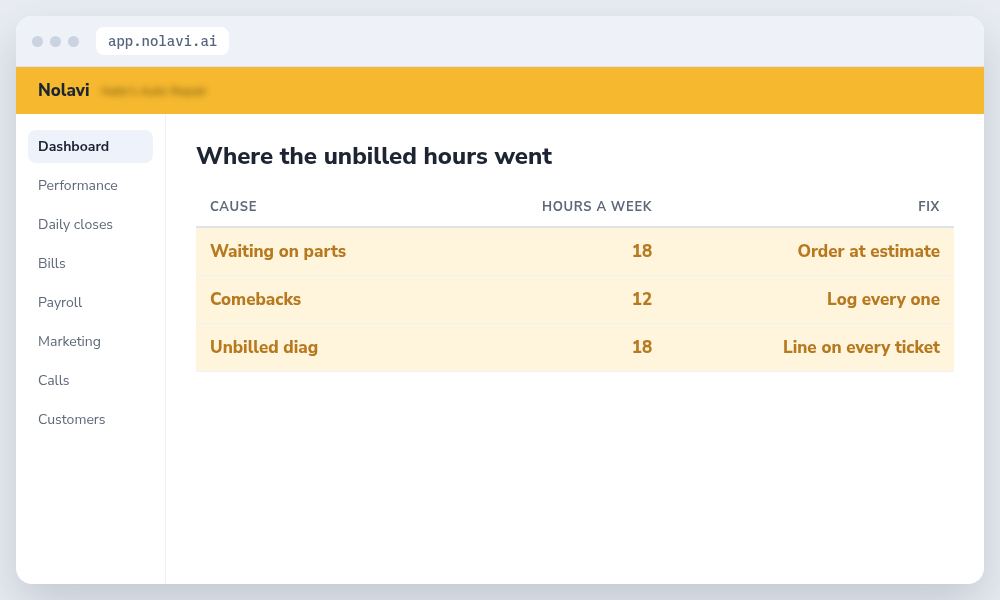
Nolavi matched every clock in and clock out to repair orders. Tech 3 billed 89% of his paid hours. Tech 1 billed 74%. The gaps came from three places: waiting on parts ordered late, two jobs that kept coming back, and diag time no one was billing.
Three causes, each with a fix.
3
The correction
Parts are now ordered when the estimate is approved, not when the car is on the lift. Every comeback is logged. Diag time has a line on every ticket. Each tech sees their own billed hours each week on their My pay page.
4
The verification
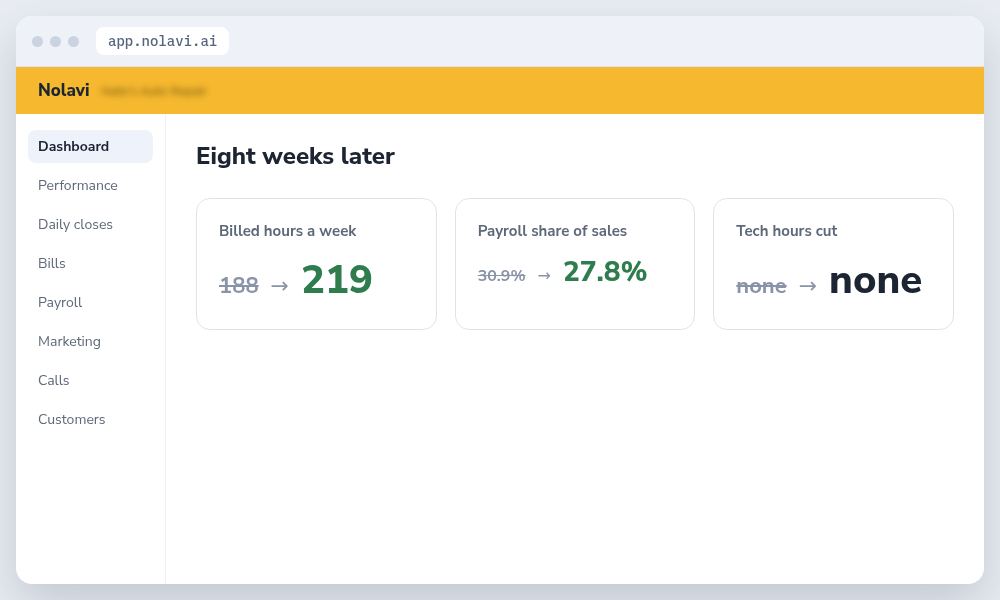
Billed hours rose from 188 to 219 a week in eight weeks. Payroll fell from 30.9% to 27.8% of sales. No one lost hours.
More billed hours, no cuts.
How we work. We make changes like this for shops all the time, using each shop's own data. The numbers shown are examples.
Auto repair shop coaching from your own numbers. Nolavi sends a plain report every Monday with the moves worth making next. See how it works
Questions
Quick answers.
What is a good technician efficiency rate?
Many shops aim for 85% to 100% of paid hours billed. If it's below 80%, look at parts wait time, comebacks and unbilled diag first.
How do I track technician efficiency without shop software?
Start by matching the hours on repair orders to the hours on each paycheck. The gap is your efficiency loss.
Open the demo and find this kind of problem in a minute. Or book your 14 day free trial: it starts with a quick call, and we set it all up and fit it to your shop.
 Nolavi