How can I tell if someone is stealing from my repair shop?
Something feels off with the money, but you can't prove anything. Here's how Nolavi works through it, the same way a good mechanic works on a car: find the concern, the cause, the correction, then verify the fix.
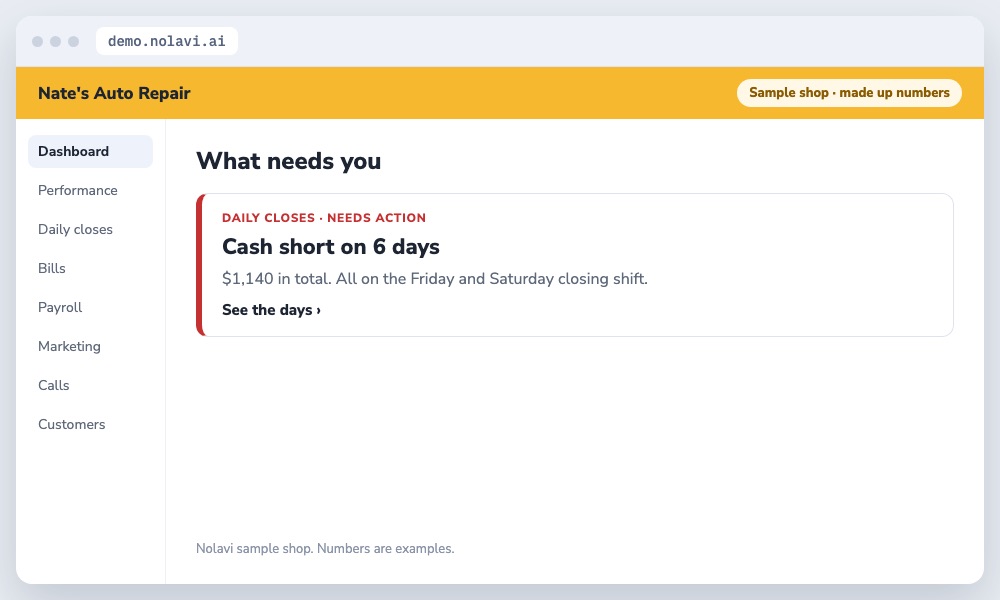
Nate's sales looked normal, but his bank balance kept coming up short.
A pattern, not a hunch.
2
The cause
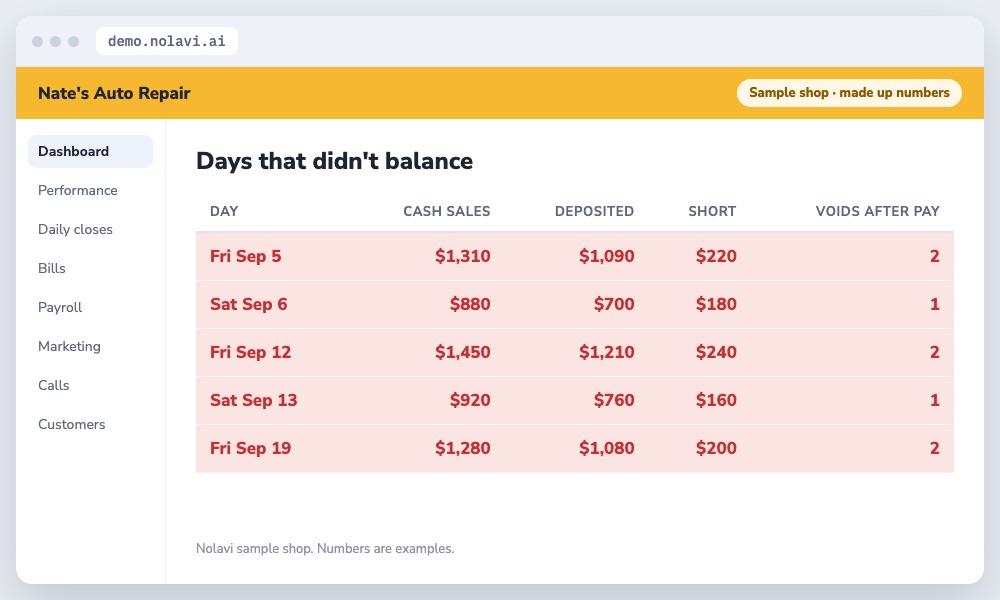
Nolavi compared every day's sales to the deposits. Cash came up short on 6 days, all on the same closing shift, and 9 tickets were voided after payment on those days.
The exact days, amounts and tickets.
3
The correction
Nate got a list of the exact days, tickets and amounts. He changed who closes and turned on a rule that a manager approves any void after payment.
4
The verification
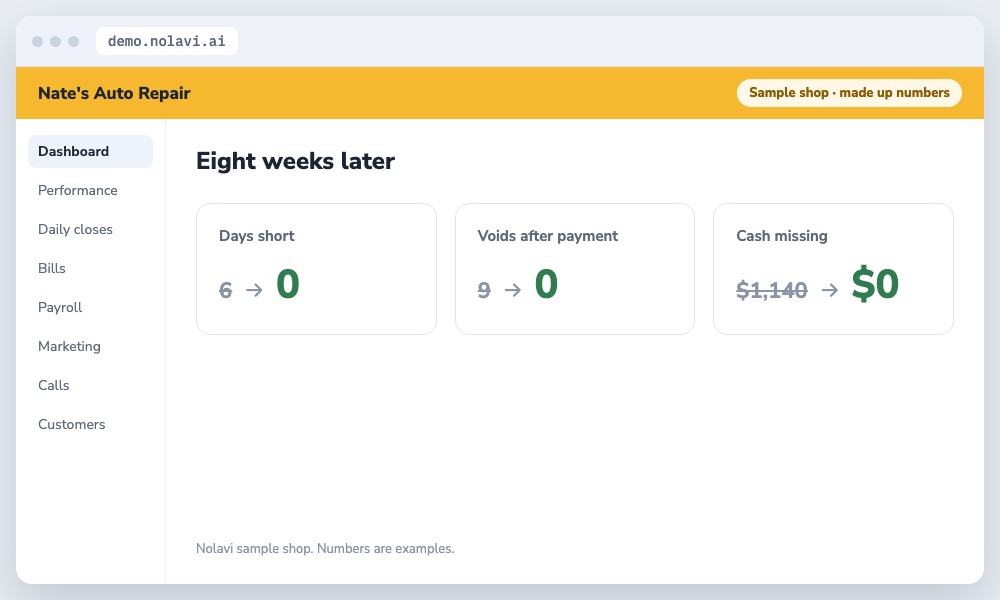
Cash has balanced every day for 8 weeks, and voids after payment went to zero.
Balanced, every day.
How we work. We make changes like this for shops all the time, using each shop's own data. The numbers shown are examples.
Auto repair shop bookkeeping, checked every day. Nolavi checks every bill and every day's deposits, so your books stay right without the late nights. See how it works
Questions
Quick answers.
What are the signs of employee theft at a repair shop?
Cash shorts on the same shifts, voided or discounted tickets after payment, and parts bought but never billed.
How do I check without accusing anyone?
Look at the numbers by day and shift first. Patterns show up fast and let you ask the right questions.
Open the demo and find this kind of problem in a minute. Or book your 14 day free trial: it starts with a quick call, and we set it all up and fit it to your shop.
 Nolavi