You buy a lot of parts. You're not sure they all end up on a ticket. Here's how Nolavi works through it, the same way a good mechanic works on a car: find the concern, the cause, the correction, then verify the fix.
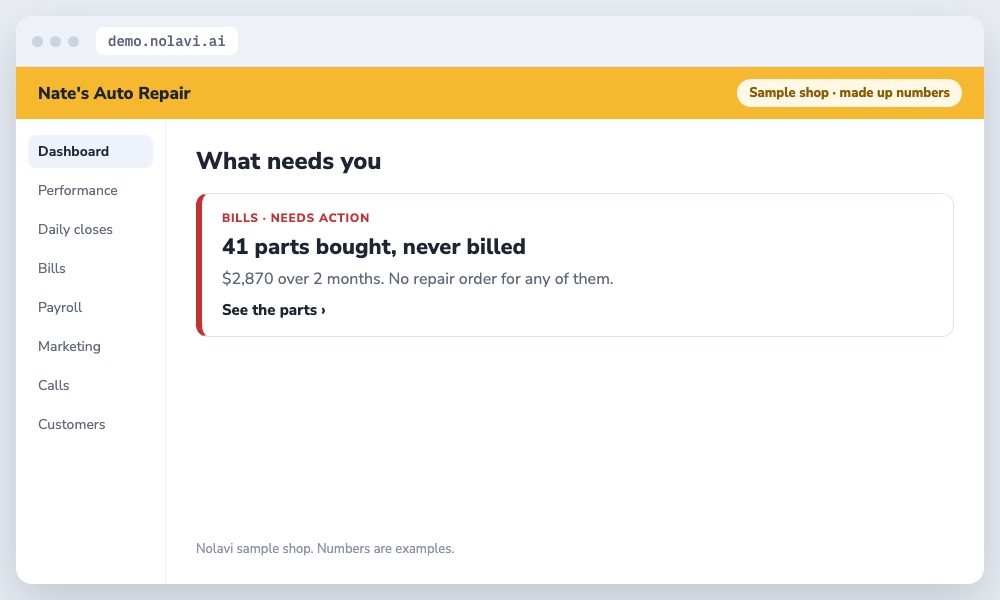
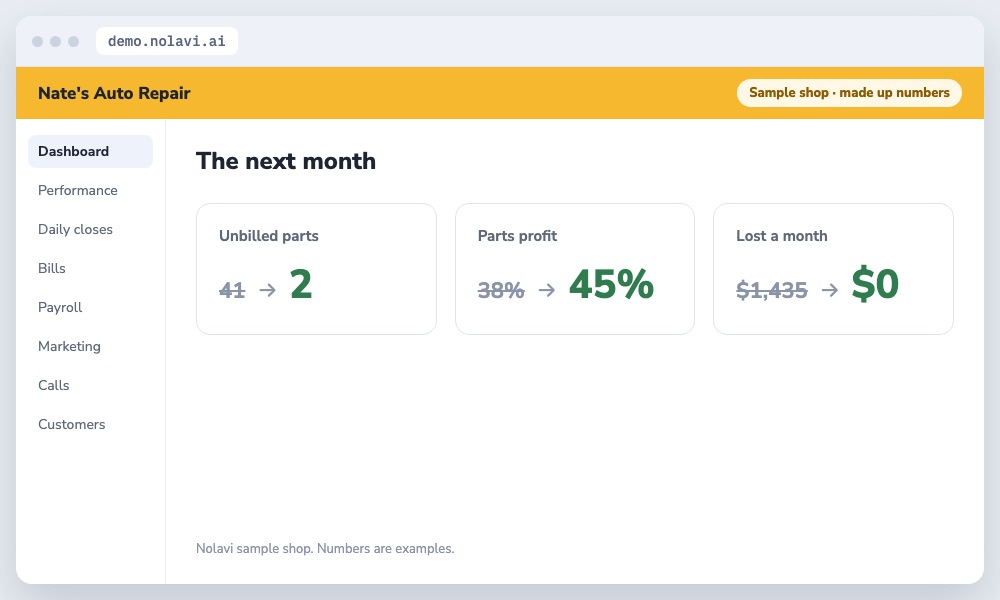
Nate's parts profit was 38% when it should have been about 45%.
Lost profit, found automatically.
2
The cause
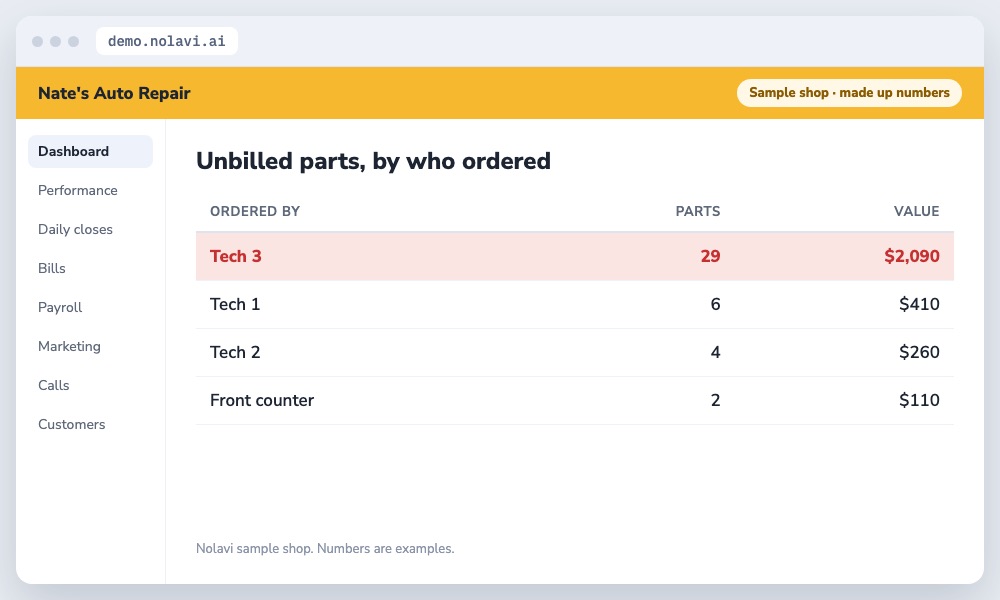
Nolavi matched every part bought to a repair order. 41 parts in two months, worth $2,870, were never billed to anyone. Most were brake parts picked up by the same tech.
One pattern stood out.
3
The correction
Nate set a rule that every parts order needs a repair order number, and Nolavi flags any part that isn't billed within 3 days.
4
The verification
Unbilled parts dropped to 2 the next month, both caught and billed, and parts profit is back to 45%.
Every part has a job now.
How we work. We make changes like this for shops all the time, using each shop's own data. The numbers shown are examples.
Auto repair shop bookkeeping, checked every day. Nolavi checks every bill and every day's deposits, so your books stay right without the late nights. See how it works
Questions
Quick answers.
How do I know if parts are being billed?
Match each part on your vendor invoices to a repair order. Anything left over needs a reason.
What should parts profit be at a repair shop?
Many shops aim for 40% to 50% gross profit on parts. A drop is often unbilled or misused parts.
Open the demo and find this kind of problem in a minute. Or book your 14 day free trial: it starts with a quick call, and we set it all up and fit it to your shop.
 Nolavi